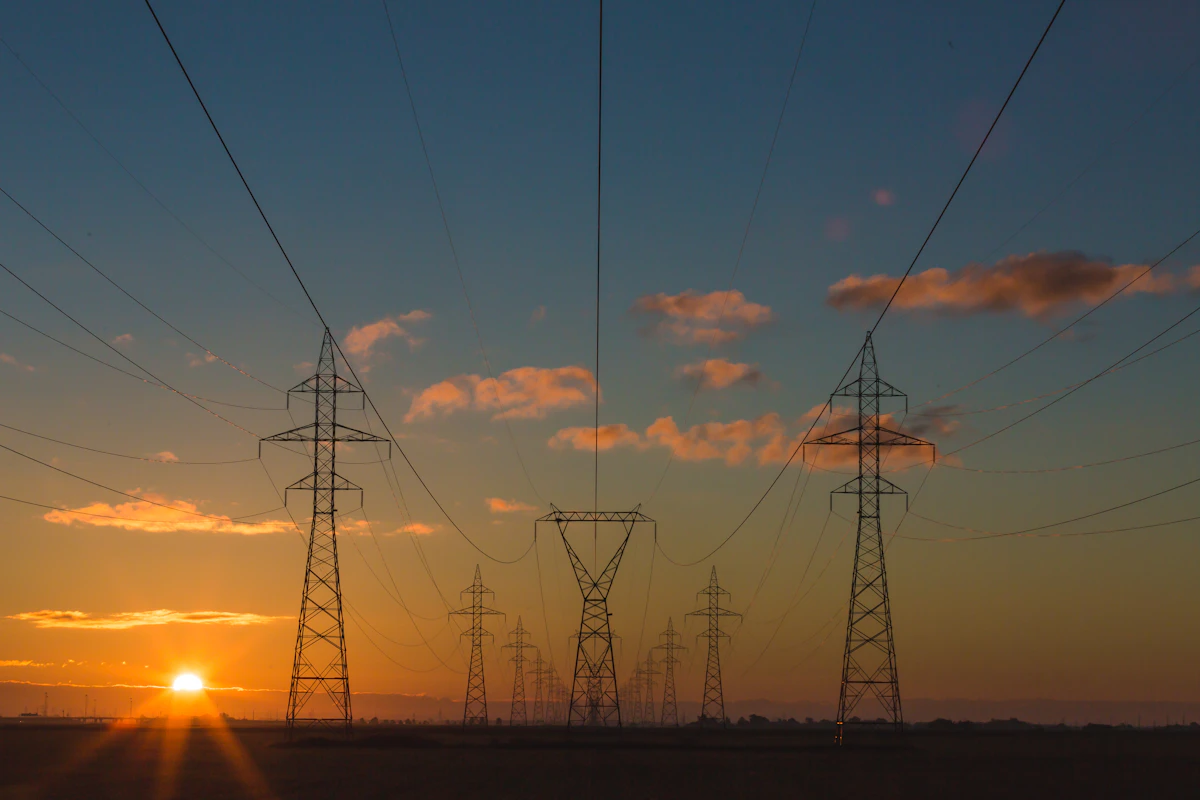
here's what keeps me up at night: the world wants always-on AI agents, but our infrastructure roadmap is still stuck in yesterday's assumptions. we architect delightful agent experiences and forget the physics that make them possible.
the math that wakes me up
the extropic team just published a model that aligns with what I've been sketching on whiteboards. production AI agents running on today's GPU stacks already consume roughly 3 gigawatts worldwide. universal assistants jump that baseline to 100 gigawatts. stream video outputs at 1 fps and you add another order of magnitude. upgrade to reasoning-grade models and you do it again.
- a 30x demand surge the moment everyone has an AI co-pilot.
- another 10x once agents render even low-frame-rate video experiences.
- a further 10x when we shift from autocomplete to high-parameter reasoning models.
now we are staring at 5+ terawatts of new infrastructure. covering nevada in solar would barely cover it. sam altman's push for a one-gigawatt data center every week requires 3-5x our current global energy production rate. the numbers do not lie—the bottleneck is real.
why everyone is building in silence
boardrooms understand the cliff. they just do not talk about it publicly because it moves stock prices and invites scrutiny. meanwhile they are racing to secure generation, transmission rights, and exclusive compute contracts. the agents keep shipping while the energy story stays off the slides.
physics-native compute changes the equation
GPUs are phenomenal at parallel math, but they are blunt instruments for the kind of probabilistic sampling modern agents require. thermodynamic compute leans on the natural tendency of physical systems to explore state space efficiently. it is not magic; it is the first time we have aligned hardware with the workloads agents actually run.
pair that with smart power procurement—onsite renewables, long-duration storage, firmed capacity contracts—and the 5-terawatt shock softens. the teams who orchestrate both sides are the ones who capture market share when demand spikes.
what builders should operationalize right now
- audit your agent roadmap against real power budgets—know how many kilowatt-hours every user workflow consumes.
- partner with data center operators and utilities early; negotiate green baseload and co-location near generation assets.
- prototype with physics-first compute vendors so you are ready the moment their hardware clears pilots.
- instrument carbon, latency, and cost telemetry so procurement, compliance, and customers see the impact in one dashboard.
we need breakthrough efficiency tech and new power capacity. only one of those can be built by a dozen engineers in a garage outside boston. that is where I am betting—and where the next decade of AI infrastructure will be won.
#AIagents #AIinfrastructure #EnergyInfrastructure #Extropic #ProjectOlivia